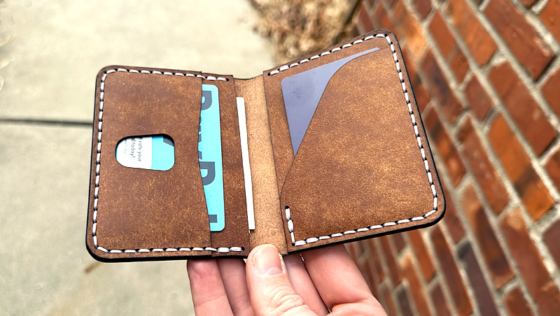
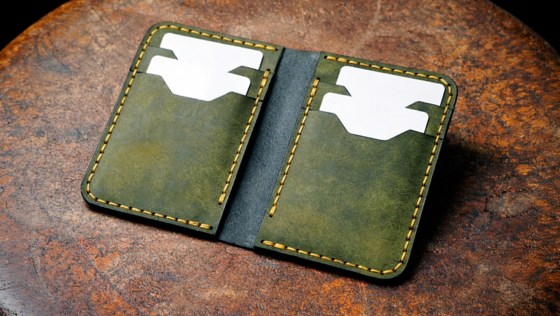
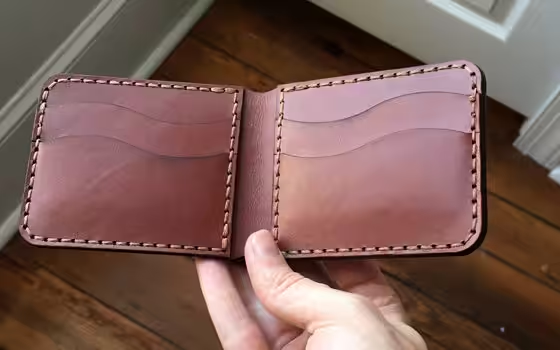
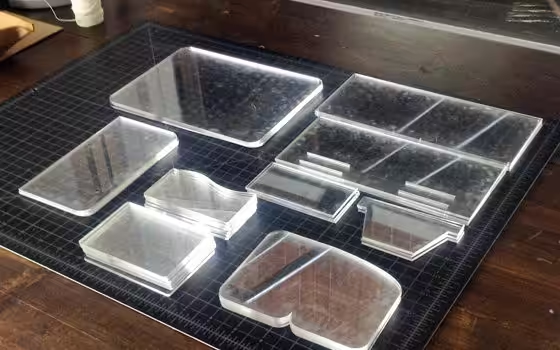
The wrap wallet is one of the most distinctive styles in leathercraft — and once you understand how it works, you’ll see why it’s become a favorite for anyone trying to slim down from a bulky bifold.
At its core, a wrap wallet is exactly what it sounds like: a single piece of leather that wraps around itself to create card slots and a cash compartment, held in place by the tension of the leather itself. No snaps, no zippers, no hardware. Just leather, thread, and a clever fold.
How a Wrap Wallet Works
The defining feature of a wrap wallet is its construction. Rather than folding flat like a bifold or hinging open like a trifold, the wrap wallet uses a diagonal or curved cut in the leather that creates a wrap-around flap. This flap forms the front card pocket on one side and the outer shell on the other, with a middle compartment for cash or additional cards tucked inside.
The result is a wallet that holds everything you need — a handful of cards, some folded bills, maybe an ID — in a package that’s roughly half the thickness of a standard bifold.
Who Is a Wrap Wallet For?
The wrap wallet has a specific audience and it’s a passionate one. If any of these sound familiar, this might be your next wallet:
Front pocket carry people. The wrap wallet was practically designed for the front pocket. Its slim profile and small footprint sit flat in a front pocket without the bulk that makes sitting with a bifold in your back pocket uncomfortable.
Minimalists. If your current wallet is stuffed with receipts, loyalty cards, and things you never use, the wrap wallet forces a useful constraint. It holds what you need and nothing more — usually 3-8 cards and some folded bills. That’s it.
People tired of back pocket carry. Sitting on a thick bifold all day is genuinely bad for your posture and your wallet. The wrap wallet is the most common reason users cite for switching to front pocket carry permanently.
Gift makers. Because it’s made from a single piece of leather with minimal tools and no hardware, the wrap wallet is one of the most popular first leather projects — and one of the most impressive-looking gifts you can make by hand.
Wrap Wallet vs. Bifold — What’s the Difference?
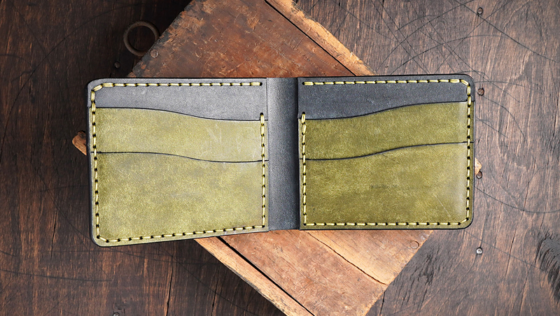
The bifold is the classic American wallet — two panels that fold in half, with card slots on the inside and a bill compartment in the middle. It’s familiar, functional, and works well if you carry a lot of cards and cash regularly. But times are changing! A lot of us are paying with things using our phone and don’t need to carry around 20 cards and a wad of cash anymore.
The wrap wallet takes a completely different approach. Where the bifold opens up to reveal its contents, the wrap wallet keeps everything accessible from the outside — cards slip in and out of the exterior pockets without opening anything. There’s no hinge, no fold, and very little wasted space.
Bifold pros: More card capacity, familiar layout, easier to organize
Bifold cons: Bulky in a back pocket, sits unevenly when sitting
Wrap wallet pros: Slim, lightweight, front pocket friendly, no hardware
Wrap wallet cons: Less card capacity, takes a little getting used to accessing cards
Neither is objectively better — it comes down to how many cards you carry and where you prefer to keep your wallet.
Where to Buy a Wrap Wallet
If you’re looking for a finished wrap wallet rather than making your own, here are my personal recommendations for where to find quality handmade versions:
Independent leather makers are where I’d start. A few makers whose work I’ve followed and respect: (no affiliation)
# | PREVIEW | PRODUCT | VIEW |
1 | 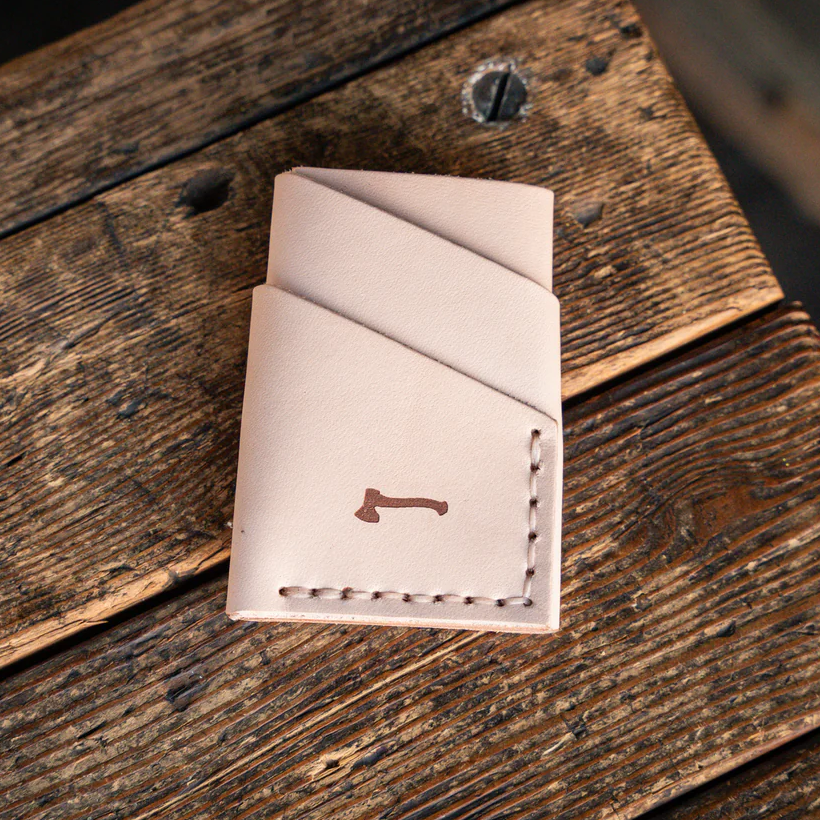
| The Port Wallet by Craft & Lore | ; |
2 | 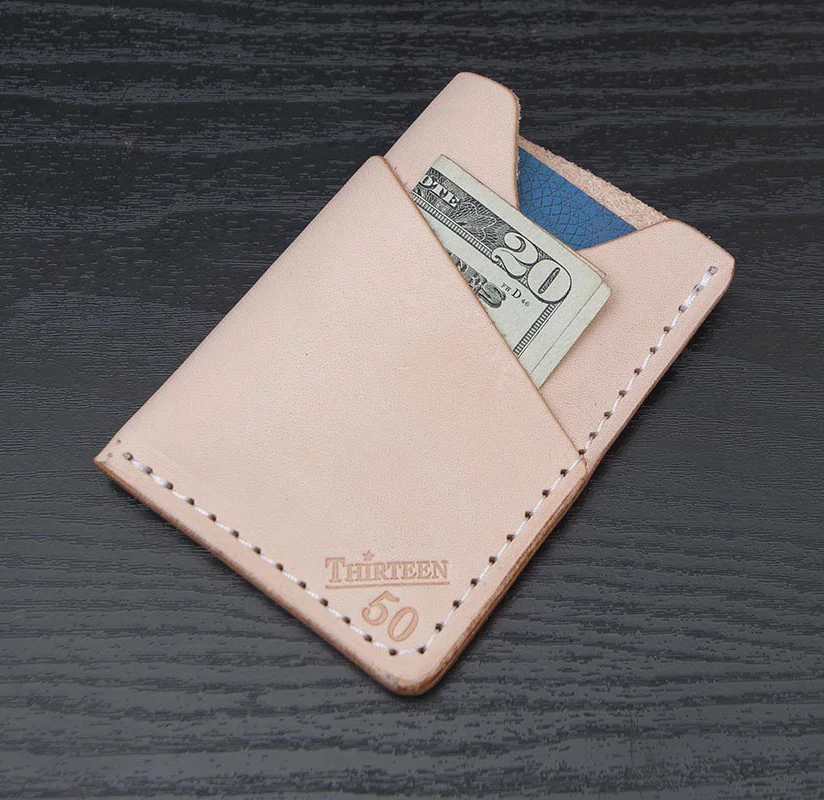
| The Wrap Minimalist Wallet by Thirteen 50 Leather | ; |
3 | 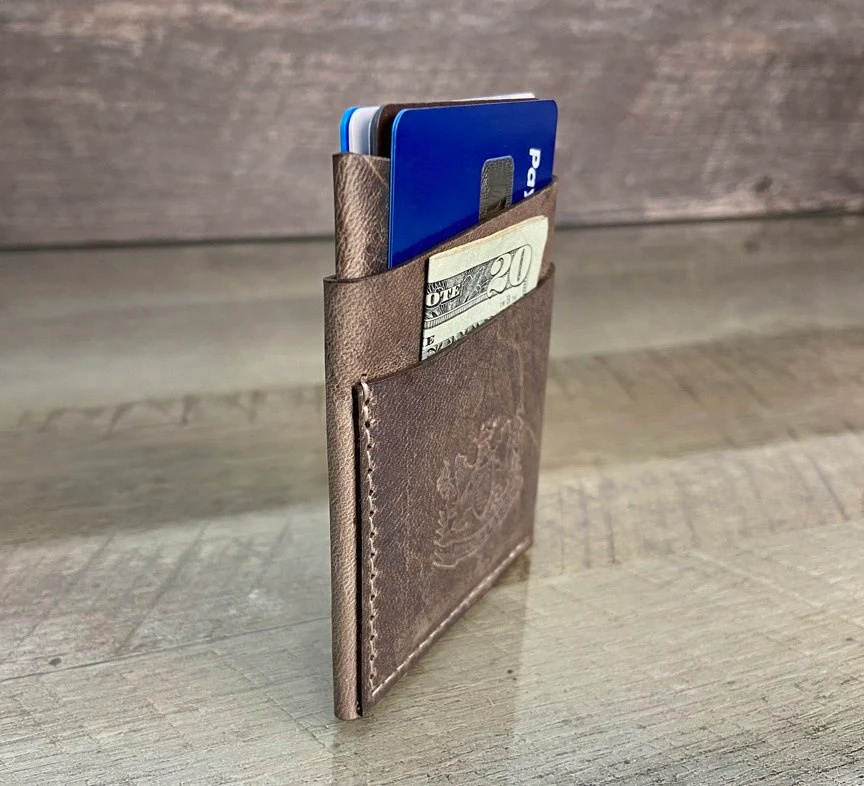
| The Wrap Wallet by Mitchell Leather | ; |
These are small shops run by people who care about their craft. You’ll pay more than a mass-produced wallet but you’re getting something built to last.
Etsy is your best fallback if you want more options or a specific color, leather type, or price point. Search “leather wrap wallet” and filter by handmade — there are hundreds of makers selling quality versions at a range of price points. Look for sellers who specify full grain or vegetable-tanned leather in the listing.
Local craft markets and leather goods shows are worth checking if you want to handle the wallet before buying. Feeling the weight and stiffness of the leather in person tells you a lot about how it’ll hold up over time.
How to Make a Wrap Wallet
The wrap wallet is one of the most beginner-friendly leather projects you can take on. Here’s what makes it approachable:
No hardware required. No snaps, rivets, or zippers. The wallet stays closed and holds its shape through the leather wrap itself.
Minimal tools. You need a cutting tool, a stitching chisel or awl, needles, thread, and something to finish the edges. That’s the whole toolkit.
Single piece construction. Because the body of the wallet comes from one piece of leather, there’s less room for error than a multi-panel build. Cut it right, stitch the single seam, and you’re done.
Fast build. Most makers finish a wrap wallet in a single session — two to three hours from cutting to finished wallet.
The most important variable is your leather choice. The wrap wallet relies on the leather having enough body to hold its shape when wrapped — a medium-firm, but thin, vegetable-tanned leather is your best bet. I recommend 1.2mm – 1.4mm (3-4oz) thick leather for this type of wallet. Since the leather will be wrapping around itself a few times, using a thick leather will make the edges too bulky.
Need A Free Wrap Wallet Pattern?

If you want to make your own, I’ve put together a full project page for the wrap wallet that includes everything you need to get started.
[Build Your Own Wrap Wallet — Free Pattern + Video →]
You’ll find the free PDF pattern sized for standard home printing, a complete materials and tools list, and a full build-along video that walks through the entire construction from cutting to finished wallet. It’s one of the most-watched builds on the MAKESUPPLY YouTube channel!
More Free Leather Wallet Patterns
If you’re exploring wallet styles before committing to one, here are a few others worth looking at: